


Overtake Rush 3D: Car Game
4.52.93K Reviews
App Specs
- Version
- 1.1.12
- Updated On
- License
- Free
- Downloads
- 10,000,000+
- Developer
- CASUAL AZUR GAMES
- Categories
- Racing
- Platform
- Android
Screenshots
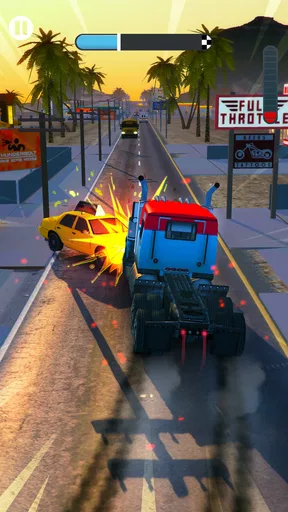
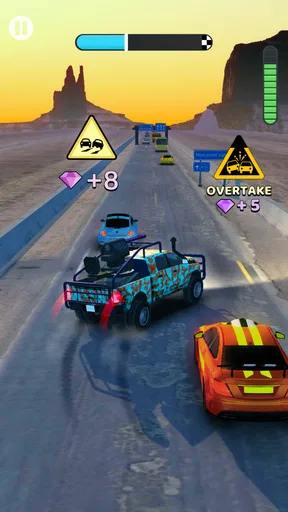
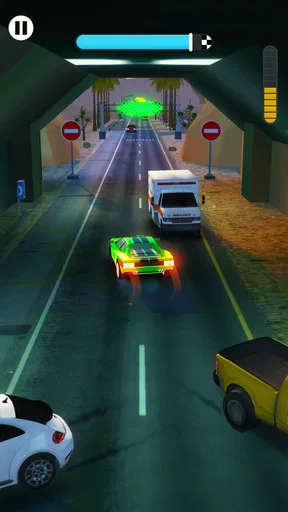
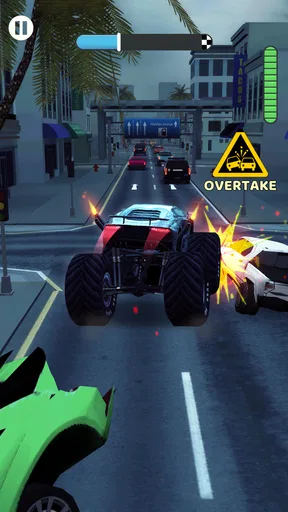
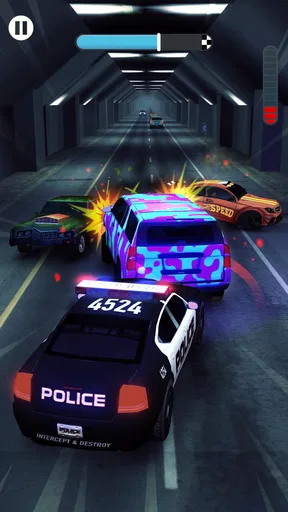
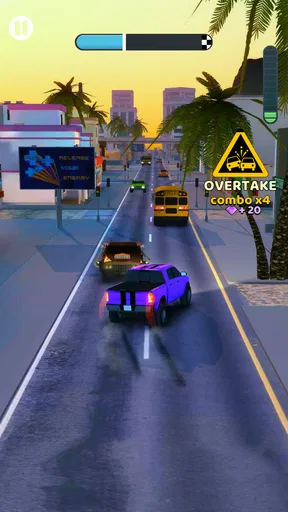
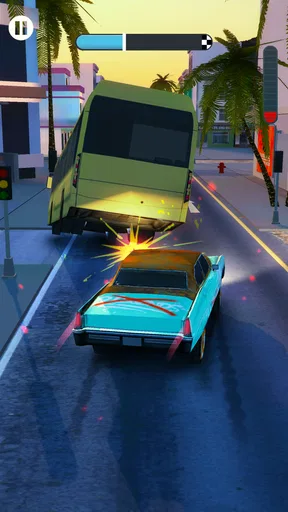
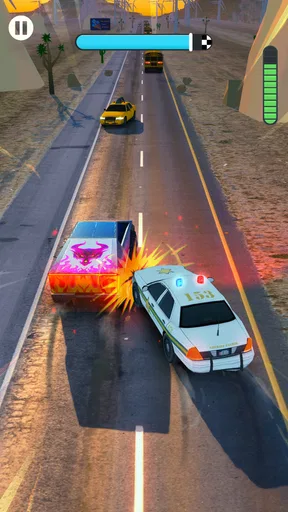
 Analysis by AppCompare
Overtake Rush 3D: Car Game is the kind of racing game I can open for a short break and understand almost immediately. It puts the focus on driving through traffic, overtaking vehicles, and surviving police pressure rather than asking me to learn a large career system before I can enjoy the first race. That direct approach makes it approachable, but it also means the game depends heavily on quick reactions and clear visual attention.
Developed by CASUAL AZUR GAMES, this free racing title is available for players aged Everyone 10+ and runs on Android 7.0 or later. It has reached over 10 million installs and holds a 4.5 average from around 233 thousand ratings, which suggests that its simple traffic-racing format has found a broad audience. I see it as a focused option for people who want short, energetic driving sessions, not as a full simulation for players looking for deep car tuning or a detailed motorsport career.
How the game presents the road and its controls
I’d begin with the road itself: this section looks at how the traffic and chase pressure shape what I need to notice, and why a simple presentation can still demand real concentration. That distinction matters before judging whether the controls feel approachable. Next, I’ll consider how to make those quick decisions more deliberately rather than treating every gap as an invitation to overtake.
Readability and navigation during a race
The strongest first impression is how quickly the main idea becomes clear. I do not need to study a complicated map or decode a long list of objectives before getting behind the wheel. The road, surrounding traffic, and immediate danger are the important information, so the game’s basic appeal is easy to grasp even if I have never played it before.
That simplicity is useful for casual players and for anyone who prefers a game with little menu friction. I can think of it as a pick-up-and-play racer: the value is in the next stretch of road, the next gap between cars, and the next decision about whether an overtake is worth the risk. This is also where the game differs from more elaborate racing alternatives, which often spend more time on vehicle selection, upgrades, event calendars, or racing rules.
In practice, readable racing is not only about attractive graphics. It is about noticing a vehicle early enough to react, understanding where the safe path is, and recognizing when the police chase changes the pressure of the run. The straightforward structure helps because there are fewer unrelated systems competing for my attention. Still, the fast pace can make the screen feel busy when several vehicles and hazards demand attention at once.
I would recommend beginning with deliberate, moderate movements rather than trying to weave through every opening immediately. The tempting gap is not always the useful gap. A safer rhythm is to watch the traffic pattern for a moment, choose one side of the road, and move only when the path remains open. This small change in approach makes the game easier to read and reduces the feeling that every mistake comes from a lack of reflexes.
Worth Reading Before You Choose

EA SPORTS FC Mobile 26 Is a Bigger Football Game, but It Takes Time

Flipboard Shows What News Apps Must Do Beyond the Feed

Switching to Android Auto Means Rethinking Your Driving Routine

Google Calendar Makes a Crowded Week Easier to Manage

Ludo King Makes the Most of the Minutes Between Plans

Baby Panda World Brings Quick Play to Modern Phones, but Its Game Library Feels Busy
What the driving style asks from different players
The game’s central challenge is built around timing. Overtaking requires a quick visual judgment, followed by a controlled input. That makes the experience satisfying when I get into a rhythm, but it can be demanding for players who need more time to process moving objects or who find rapid direction changes uncomfortable.
For players with limited fine-motor control, the important question is not whether the game looks simple, but whether its driving input feels forgiving enough. A racing game can have a clean interface and still be difficult if small movements cause large changes in position. I would approach each session by testing the controls in a low-risk way, keeping movements modest until I understand how much correction is needed. That is more effective than immediately attempting aggressive overtakes.
Players who are comfortable with fast action may appreciate the narrow focus. There is little need to divide attention between driving and a complicated set of buttons. The challenge comes from the road itself. On the other hand, anyone seeking relaxed cruising may find the police-chase element and traffic pressure too intense, especially when the goal is simply to unwind.
For younger players, the Everyone 10+ rating is a useful guide for families deciding whether the tone and action suit them. I would still consider the individual child’s tolerance for chase sequences, collisions, and rapid visual movement rather than treating the age label as a complete personal recommendation.
Playing in short sessions and ordinary situations
This is a good fit for the everyday moment when I have a few minutes while waiting for an appointment or taking a break from work. I can start a session without committing to a long story chapter or a complex tournament schedule. That short-session quality is one of the game’s practical strengths, especially for players who use their phone in small pieces of free time.
There is a trade-off, though. A game built around immediate action is less suitable when I am tired, distracted, or in a noisy environment. If I am riding public transport, sitting in a bright outdoor space, or dealing with interruptions, the quick decisions become harder. I would not choose this as a background game to play while carrying on a conversation; it rewards attention more than passive tapping.
Sound-sensitive players may also prefer to control the phone’s volume or play without relying on audio cues. The road should remain the main source of information, but concentrating on traffic and pursuit pressure can become tiring when the surrounding environment is already busy. Playing in a calmer setting, using a comfortable brightness level, and taking breaks after stressful runs can make the experience more manageable.
One useful routine is to separate practice from challenge. During the first few runs, I focus on learning the traffic flow and judging distances instead of chasing the longest possible overtake. Once I feel comfortable, I can take more risks. This approach is helpful for players who become frustrated by repeated mistakes because it turns early attempts into observation rather than immediate performance tests.
Where the game feels inclusive, and where it does not
The accessible part of the design is its narrow purpose. I am not asked to manage a large collection of menus while driving, and the basic objective is easy to explain to another person. Someone who has difficulty with dense interfaces may find this more approachable than a racing game filled with upgrade screens, complicated event rules, and several layers of progression.
That does not mean the experience works equally well for every ability. Fast traffic racing naturally favors players with reliable visual tracking, quick reactions, and comfortable touch control. If a player has hand tremors, slower response time, motion sensitivity, or difficulty distinguishing vehicles against the road, the same simplicity may not be enough to remove the barrier. The game’s appeal comes from pressure, and pressure is precisely what some players may need to avoid.
I would also be cautious about recommending it for someone who wants a quiet, low-stimulation driving experience. The police chase changes the mood from ordinary overtaking to escape and urgency. That can make a run more exciting, but it may also create stress for players who prefer predictable pacing. In that situation, a slower racing game or a driving title centered on exploration would probably be a better choice.
Another trade-off concerns depth. Players who enjoy building a garage, comparing detailed vehicle statistics, or planning long-term upgrades may feel that a streamlined traffic racer gives them fewer ways to personalize the experience. The game is at its best when the act of avoiding traffic is enough motivation. It is not the obvious choice for someone who measures enjoyment through extensive customization.
Free access and the practical cost of continuing
The game is free to download, which makes it easy to try without an upfront purchase. Optional in-app purchases range from $0.99 to $5.99 per item. I would treat that as a reason to check the purchase settings before handing the phone to a child, particularly because the game’s quick-session structure can encourage repeated attempts.
For me, the sensible approach is to play the free version long enough to decide whether the driving itself is enjoyable. If the basic traffic and chase loop does not feel satisfying, spending money is unlikely to solve that problem. If I do enjoy it, I would still consider purchases carefully and avoid treating them as a shortcut for learning the road.
This is also where the title compares differently with premium racing games. A paid game may offer a more settled experience from the start, while a free game is easier to sample but can make optional spending part of the longer session. Neither model is automatically better. The right choice depends on whether I value instant access or prefer a single purchase with fewer decisions after installation.
Version, device expectations, and everyday reliability
The current version is 1.1.12, and the minimum Android requirement is 7.0. That gives the game a relatively broad starting point for Android users with older compatible devices, although the actual comfort of play will still depend on the phone’s screen, responsiveness, and general condition.
For a reaction-based racer, touch delay matters more than it would in a turn-based game. Before judging my own ability, I would check whether the phone responds consistently, whether the display is easy to see, and whether notifications or battery-saving behavior interrupt a run. These are ordinary practical details, but they can feel like gameplay problems when the real issue is the device or the surrounding situation.
I would also avoid playing while walking, crossing a street, or doing anything that requires real-world attention. The game’s traffic theme should not encourage unsafe multitasking. It is best treated as a focused activity, even when a single run appears short.
Who should choose it, and who should look elsewhere
I think this game suits players who want a direct arcade-style racing experience with traffic to dodge and pursuit pressure to raise the stakes. It is particularly appealing if I enjoy learning through repetition, prefer short sessions, and do not need a large progression system to keep me interested. The free entry point also makes it practical for someone who wants to test the format before committing to a more expensive racing game.
I would steer away from it if my priority is realistic motorsport technique, calm exploration, or extensive car management. A simulation-focused alternative would be better for careful braking lines and detailed vehicle behavior. An open-world driving game would be a stronger choice for wandering without constant traffic pressure. A slower arcade racer may suit players who want colorful competition without the same demand for rapid visual decisions.
My most useful advice is to decide what kind of challenge I want before installing it. If I want a quick test of timing and attention, the design makes sense. If I want to relax after a stressful day, the chase element may work against that goal. If I am choosing for another player with motor or sensory needs, I would let them try the controls personally rather than assuming that a simple interface guarantees comfort.
My inclusive verdict after weighing the trade-offs
The best thing about this racer is its clarity of purpose: drive, overtake, react, and keep moving. That makes it easy to recommend to casual players who enjoy immediate action and do not want a complicated introduction. Its broad Android compatibility, free starting price, and strong store reception add to its appeal, while the short-session format works well in ordinary spare moments.
At the same time, the game’s main attraction is also its biggest limitation. Fast traffic and police pressure can be demanding for players with slower reactions, motor-control difficulties, visual-processing challenges, or sensitivity to hectic scenes. I would not describe it as universally comfortable; I would describe it as straightforward but reflex-heavy. That distinction matters when choosing a game for different abilities and environments.
Overall, I would recommend it to a friend who wants a compact traffic racer and enjoys improving through repeated attempts. I would suggest trying it in a calm setting, starting with conservative overtakes, and deciding on purchases only after the basic driving loop has earned that commitment. For players who need slower pacing, deeper accessibility options, or more control over stimulation, another racing style will likely be the better fit.
My final view is positive but specific: this is a focused free racing game, not an all-purpose driving experience. When I want quick tension and a clear objective, it does the job well. When I need relaxation, extensive customization, or a more forgiving pace, I would choose something else.
Pros
- Simple controls make it easy for beginners to start racing quickly.
- Short races are convenient for quick gaming sessions.
- Bright 3D visuals give the tracks a lively
- arcade-style look.
- Vehicle upgrades add a sense of progression between races.
- Offline play is useful when you have no internet connection.
Cons
- Gameplay can become repetitive after playing several similar races.
- Ads may interrupt the experience
- especially between completed levels.
- Handling may feel too simplistic for players seeking realistic driving.
- Progression can feel slow without spending time on repeated races.
- The game may offer limited depth compared with larger racing titles.
FAQs for Overtake Rush 3D: Car Game
What is Overtake Rush 3D: Car Game?
Overtake Rush 3D: Car Game is a casual driving game focused on weaving through traffic, overtaking vehicles, and reaching the finish line without crashing. Its simple controls make it easy to start playing, while increasing traffic, tighter spaces, and faster movement add difficulty. It is designed for short sessions and quick entertainment rather than a realistic driving simulation.
How do you play Overtake Rush 3D: Car Game?
Gameplay generally revolves around controlling your car as it moves along a busy road. You must change lanes or steer at the right moment to pass other vehicles, avoid collisions, and collect useful rewards when available. Timing is especially important because moving too early can place you directly in another car’s path, while hesitation may cause you to miss an opportunity to overtake.
Is Overtake Rush 3D: Car Game suitable for children?
The game is generally suitable for children and casual players because its controls and objective are easy to understand. However, parents should still check the age rating, advertising settings, and any optional in-app purchase features shown on the relevant app store. Younger players may also benefit from supervision if the game displays frequent advertisements or includes reward-based progression.
Does Overtake Rush 3D: Car Game require an internet connection?
The basic driving experience may work without a continuous internet connection, which makes the game convenient for short offline sessions. Nevertheless, some functions can depend on connectivity, including advertisements, promotional rewards, updates, analytics, or other online services. Availability can vary between versions and devices, so it is best to test the game after installation rather than assuming every feature works offline.
Is Overtake Rush 3D: Car Game free to download and play?
Overtake Rush 3D: Car Game is typically offered as a free download, allowing users to try its main gameplay without paying upfront. Free access may be supported by advertisements, and some versions can include optional purchases or upgrades. Before downloading, review the store listing for the latest information about ads, in-app purchases, permissions, supported devices, and privacy practices.


